Category Archives: Babycare Advice

Lots of ideas and advice to help guide you

#6. Top 10 things you don’t need for your baby

Photo by Pixabay on Pexels.com

I am a big advocate of swaddling. In my experience young babies who are swaddled sleep much better than those who are not. Wrapping your baby is one the very first things I’d suggest if your baby has trouble falling asleep and staying asleep.

However, I do not recommend you buy a swaddle suit. Not only are they an unnecessary expense but can actually do more harm than good, potentially causing damage to your baby’s hips. All you need to swaddle your baby are muslin cloths.

#6 Item you should avoid buying your baby: Swaddle Suits

Why Swaddle?

  • Swaddling basically means “wrapping your baby firmly.” The sensation of pressure on their bodies mimics the feeling of being in the womb and provides comfort (like a hug!). This comforting feeling allows them to feel safer and more relaxed when falling asleep.
  • During the first months of life the Moro Reflex, or Startle Reflex, causes a baby to suddenly fling their arms out from their body. Not only does this physically startle a baby awake, but can be very surprising and upsetting to some babies. At this young age they don’t really understand that these arms are their own, so the feel and sight of them being flung out from their body is quite a shock. This reflex will often wake a baby and disturb what should be restful sleep. Swaddling keeps the arms wrapped firmly against the body and prevents the Moro Reflex from startling your baby awake.

Why shouldn’t I get a Swaddle Suit?

There are many brands and styles of swaddle suits available. I don’t profess to have used and assessed every one, so my recommendation not to use them is equal parts’ anti swaddle suit’ and ‘pro muslin cloth’ for swaddling. Some are wraps with velcro and buttons, others are zip up suits, there are many materials and styles and quirky names. What they all have in common is a price point well above a pack of muslin cloths and a full body constraint*.

Anti Swaddle Suit

Too often swaddle suits are not tight enough across the chest and upper body and too tight across the hips and legs. Many suits have little wings for the arms to sit above the head, directly contravening what I see as integral to the swaddle technique – having the arms tucked up against the body. The zip-up styles in particular are little more than tight sleeping bags and do not, in my opinion, provide enough pressure on the body to provide the comfort traditional swaddling affords.

Conversely, these swaddle suits will usually encase the lower body, pinning the legs into a straightened position. Babies are born with very loose hips, to assist delivery. Over the first few months of life the hips need to flex and move outwards to strengthen the joints. Babies who are wrapped too tightly across the hips when very young can get hip dysplasia, where the hips become dislocated and require weeks of treatment to correct.

* There are some swaddle ‘wings’ available that wrap only the arms. While these do not place unwanted pressure on the hips, I still feel they do not provide enough pressure  on the upper body to warrant buying them instead of the muslin cloths.

Photo by Dominika Roseclay on Pexels.com

Pro Muslin Cloth

A large square muslin cloth used for swaddling can (read: should) be wrapped firmly around the upper body with the arms against the chest, leaving the hips and legs only loosely wrapped and reasonably free. I have never noticed that babies are more or less comforted by wrapping that includes the legs; it is the pressure on their stomach, side, and back that provide the secure sensation.

Not only does the muslin cloth the provide a firm secure wrapping on your baby’s upper body without putting pressure on his hips, but they are significantly cheaper than the designed suits. You can usually buy a pack of four or five for less than one suit.

Once your baby no longer sleeps wrapped these cloths can be transformed for many other uses (everyday cloths for spills, light covering when very hot, to drape over pram to darken for naps, blankets for dolls, …. etc etc) whereas the swaddle suit will eventually be another expensive item you no longer have use for.

So, even though your baby would look super cute in a swaddle suit with tiny wings above his head,

I think you’ll find he sleeps better and grows stronger if you use a simple muslin cloth instead.

Swaddling: The Baby Sleep Secret (everydayfamily.com)

5 Comments

Filed under Baby Product Advice, Babycare Advice, General, Tips and tricks

#5. Top 10 things you don’t need for your baby.

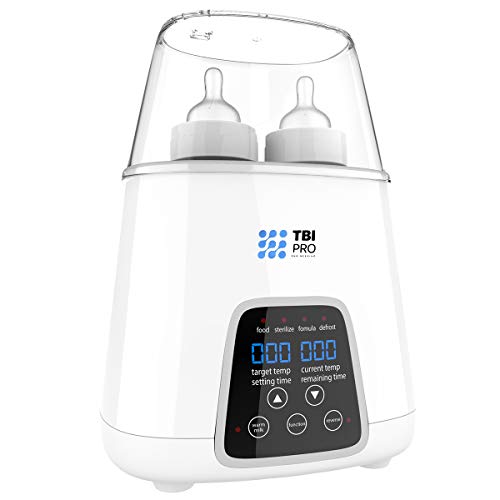
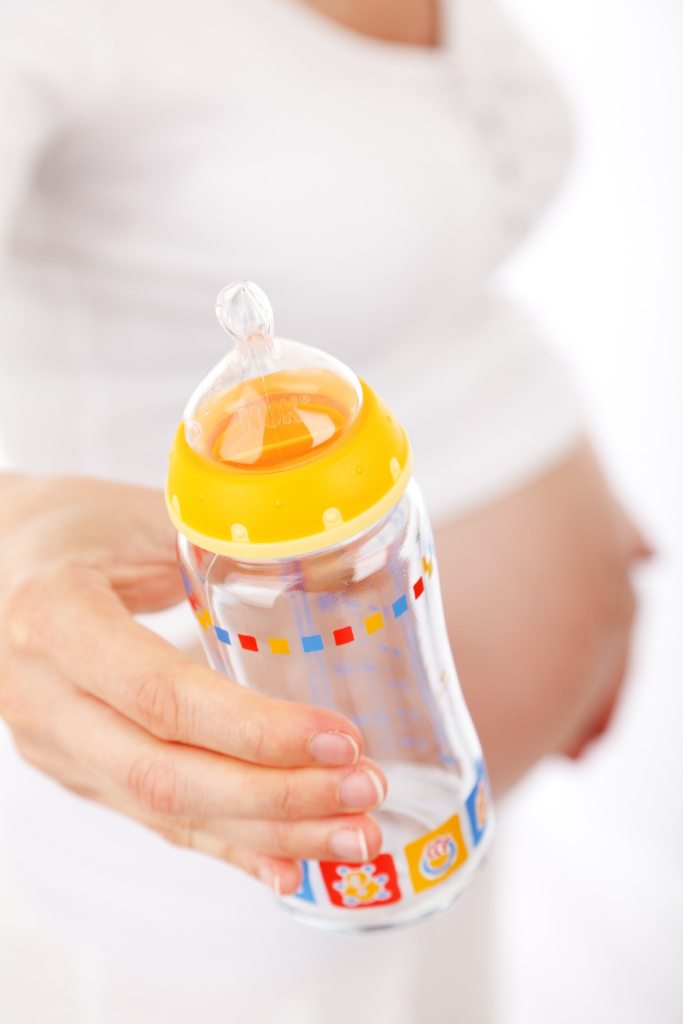
If you are using bottles to feed your baby you may want to warm them. There’s no reason why you need to; many babies happily take room-temperature or even cold formula, expressed breast milk (EBM), and water. But if warm the milk you must, there’s no need to buy an electric bottle warmer.

#5 Thing you’d be wasting your money on: A Bottle Warmer.

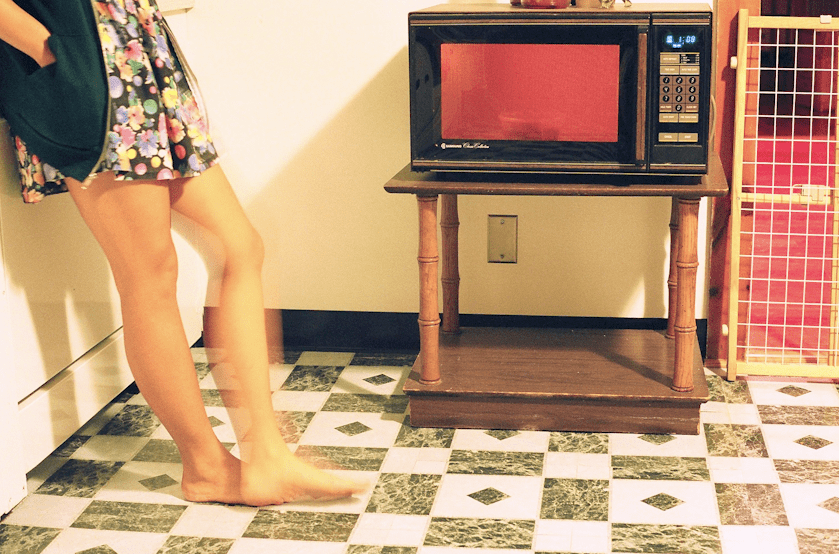
In the ‘olden days’ bottles would be warmed by sitting in a pan of warming water. After a few minutes the contents of the bottle is tested, usually on the wrist ( a very sensitive place where you’ll be acutely aware of the heat), and then given to the baby. In the 70s and 80s microwave ovens became increasingly common in homes. With them came both excitement at the prospect of fast heating and concern about the heating method; a polarity that continues today.

Why some people chose a Bottle Warmer:

Some families have generalised concerns about the microwave. There are sometimes fears about radiation leakage, chemical leach from plastics, super heating, uneven heating, nutrient break down, and more. Several of these fears have little to no basis in science, but can be hard to dispel. The introduction of bottle warmers to the market allowed anyone who worried about a microwave, but who didn’t want to heat water in a pan, to find what seemed like a middle ground; faster, safer heating. Talk of the chemical BPA being found in some plastics – a chemical which was shown to interfere with human hormones and which is activated by heat – seemed to solidify the argument for the bottle warmer.

How a Bottle Warmer Works:

The electric bottle warmer works by agitating water molecules, causing them to heat up.

How a Microwave Works:

A microwave works by agitating water molecules, causing them to heat up.

The only difference is that the microwave heats the water or formula inside the bottle directly,and the bottle warmer heats a reservoir of water outside the bottle which then transfers through the bottle into the contents inside.

The arguments against the microwave:

Despite the fact that the bottle warmer, the microwave (and water in a pan for that matter) all essentially heat in the same way, there obviously are some concerns specific to the microwave.

– The microwaves are harmful and could leak and irradiate us all. FALSE.

This is a classic case of fear of the unknown. Micro-waves (not the machine, the thingos you were worried about) are a kind of radiation akin to radio or infrared, Unless you fear your baby being near a radio then any fear of the microwave is overblown.

BPA can leach out of the bottle and into the milk. FALSE

because those clever bottle manufactures stopped using BPA. All the brands I’ve ever seen used (Avent, Medela, Tommee Tippee, Nuby, Cherub Baby, Pigeon, Dr Brown, Even Flow) offer BPA-free plastic and glass baby bottles. All plastics do degrade over time, so regardless of how you use them, old and cloudy plastic bottles should be discarded.

Microwaving the formula or EBM causes it to lose nutritional value. FALSE.

All heating and cooking has an effect on the structure of our food and drink (sometimes beneficially, sometimes not) but microwaves have no more effect than any other method of heating. In fact it may help many things retain their nutritional value as the heating time is less.

Things heated in a microwave do so unevenly, leaving super hot spots.

Now this one is true, but, how this affects heating a baby bottle needs more explanation. The microwaves are agitating the water molecules, right? That’s why some food gets hot in some spots and cool in others; different amounts of water generating different amounts of heat. If you are heating a bottle of just water in the microwave it is all heated at the same rate, without hot spots. If you heat EBM or formula, all that is needed is to shake or swirl the contents of the bottle thoroughly to evenly distribute the heat. You’ll be testing it for the correct temperature before offering it to your baby anyway, right?

Still not convinced about the microwave?

Never mind, it’s perfectly fine not to use the microwave and yet still not need to buy that bottle warmer. The bottle warmer is simply heating water around the outside of the bottle. That’s better than the water in the pan, how exactly? It’s literally no less work; put water in pan/bottle warmer, place bottle in pan/bottle warmer, turn on heat under pan/turn on bottle warmer, wait a few mins, test bottle for correct temperature, give to baby. Or how about, run hot tap water around the outside of the bottle for a minute? Sit bottle in a jug of hot water? The only benefit is a timer, meaning you can forget about it and it will turn off. While this can be useful – is it worth the $50-$80 a warmer will cost you?

Do you really need to heat the milk at all?

The simple answer is No. Because breast milk is at body-temperature one assumes that babies are used to drinking all their milk warm. But it doesn’t follow that they need it that way, or even that they would be unhappy with a different temperature. It won’t be long before they’re drinking room-temperature or cooled water, eating foods that are cold and hot, and drinking cow’s milk straight from the fridge. It’s not harmful or mean to start getting your baby used to room-temperature bottles from very early on. They’ll find it easier to enjoy foods of different temperatures later, and transition to cold cow’s milk much easier. And it’s more convenient and flexible for you both at home and out and about.

Photo by Jens Johnsson on Unsplash

My recommendations:

Personally, I’m comfortable using BPA-free baby bottles in the microwave (this goes for sterilisers too).

  • Heat the water/formula/EBM in the bottle with the lid and teat off (to avoid steam build up in the teat).
  • Get to know your microwave and how long you need. Always underestimate when using an unfamiliar microwave.
  • If heating formula or EBM shake or swirl bottle well after heating to evenly distribute heat.
  • Test the temperature of the milk on the inside of your wrist before giving it to your baby.
  • Try offering your baby room-temperature bottles before assuming he won’t like it. If he does prefer warm, try lowering the temperature to room-temperature slowly over a period of time.

you may like to read:

7 Comments

Filed under Baby Product Advice, Babycare Advice, General, Should I be Worried?, Tips and tricks

Why your 8 or 9 month old is no longer sleeping well.

Did your 8 or 9 month old baby used to be a ‘good sleeper’? Or perhaps not so good, but you’d figured out some tricks and methods to get some approximation of good sleep at night and during naps? Only now you’ve found that suddenly little Tootle (imaginary baby name of the week) is taking ages to settle, waking quickly, crying, fussing, complaining, and generally making a mockery of your previous boasts and relief that she was sleeping fairly well?

It can be very frustrating to feel like something’s gone wrong, especially if you can’t seem to fix it. But if you know what’s probably causing these sleep habits to change then hopefully you can deal with it a little better.

Your baby is older now

Bottom line, even if it seems like a moment ago you learned a routine or a method or a style of babycare that worked, in the first year your baby moves into a different phase of life every few weeks. That means that you need to adapt to these changes every few weeks as well. It’s common to see parents still trapped in a thought pattern from a time their baby was younger, often also trying to combine with information they’ve found or been given about the changes facing their baby now. For example, babies who are eating solids also being pushed to drink frequent large amounts of milk around the clock; the new phase on top of the old.

There are some big things that are changing at around the 8 or 9 month mark that can have an impact on sleep habits. Continue reading

2 Comments

Filed under Babycare Advice, General, Tips and tricks

Start Cola Earlier!

This fake ad suggesting cola is good for babies pops up all over the Internet, often mistaken as a real promotion by the dubious sounding ‘Soda Pop Board of America.’

A search for ‘baby/babies’ and ‘coke/cola’ brings up many sites discussing the merits and pitfalls of giving a baby cola, including lots of satires based on this ad and parenting forums discussing whether  it’s ok to feed a baby Coke, and whether you would judge someone else for feeding it to their baby (you’ll also find links to rants about stem cell research drawing the highly questionable conclusion that there are dead babies in Coca Cola!!). Continue reading

Leave a comment

Filed under Babycare Advice, General, Weird and Wonderful

#4. Top 10 things you don’t need for your baby

Sitting on the bed

You need a cot. One day you will need a single bed. You do not need a toddler bed, or a cot that will turn into a toddler bed.

#4 thing your baby doesn’t really need: A toddler bed

For at least the first 2 years your baby can sleep in their cot, or perhaps first in a bassinet and then a cot (I don’t recommend they sleep in your bed with you). Once they are big enough to leave the cot they can move straight into a single bed.

When Should My Baby Move Out of the Cot?

Ideally your baby can sleep in their cot until they are at least 2 years old. Somewhere between 2 and 3 they will be big enough and mature enough to be in a bed of their own.

Signs your child is ready for a ‘real’ bed are: Continue reading

2 Comments

Filed under Baby Product Advice, Babycare Advice, General, Tips and tricks