If you are using bottles to feed your baby you may want to warm them. There’s no reason why you need to; many babies happily take room-temperature or even cold formula, expressed breast milk (EBM), and water. But if warm the milk you must, there’s no need to buy an electric bottle warmer.
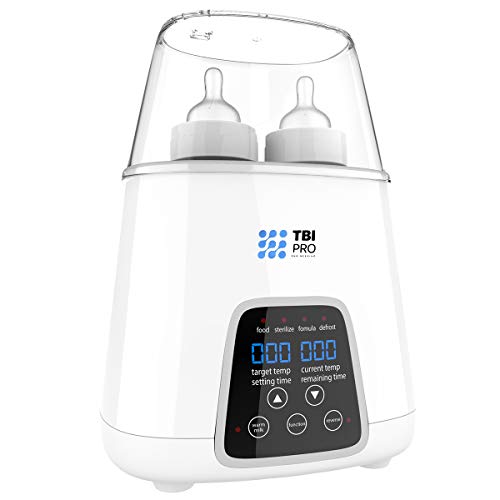
#5 Thing you’d be wasting your money on: A Bottle Warmer.
In the ‘olden days’ bottles would be warmed by sitting in a pan of warming water. After a few minutes the contents of the bottle is tested, usually on the wrist ( a very sensitive place where you’ll be acutely aware of the heat), and then given to the baby. In the 70s and 80s microwave ovens became increasingly common in homes. With them came both excitement at the prospect of fast heating and concern about the heating method; a polarity that continues today.
Why some people chose a Bottle Warmer:
Some families have generalised concerns about the microwave. There are sometimes fears about radiation leakage, chemical leach from plastics, super heating, uneven heating, nutrient break down, and more. Several of these fears have little to no basis in science, but can be hard to dispel. The introduction of bottle warmers to the market allowed anyone who worried about a microwave, but who didn’t want to heat water in a pan, to find what seemed like a middle ground; faster, safer heating. Talk of the chemical BPA being found in some plastics – a chemical which was shown to interfere with human hormones and which is activated by heat – seemed to solidify the argument for the bottle warmer.
How a Bottle Warmer Works:
The electric bottle warmer works by agitating water molecules, causing them to heat up.
How a Microwave Works:
A microwave works by agitating water molecules, causing them to heat up.
The only difference is that the microwave heats the water or formula inside the bottle directly,and the bottle warmer heats a reservoir of water outside the bottle which then transfers through the bottle into the contents inside.
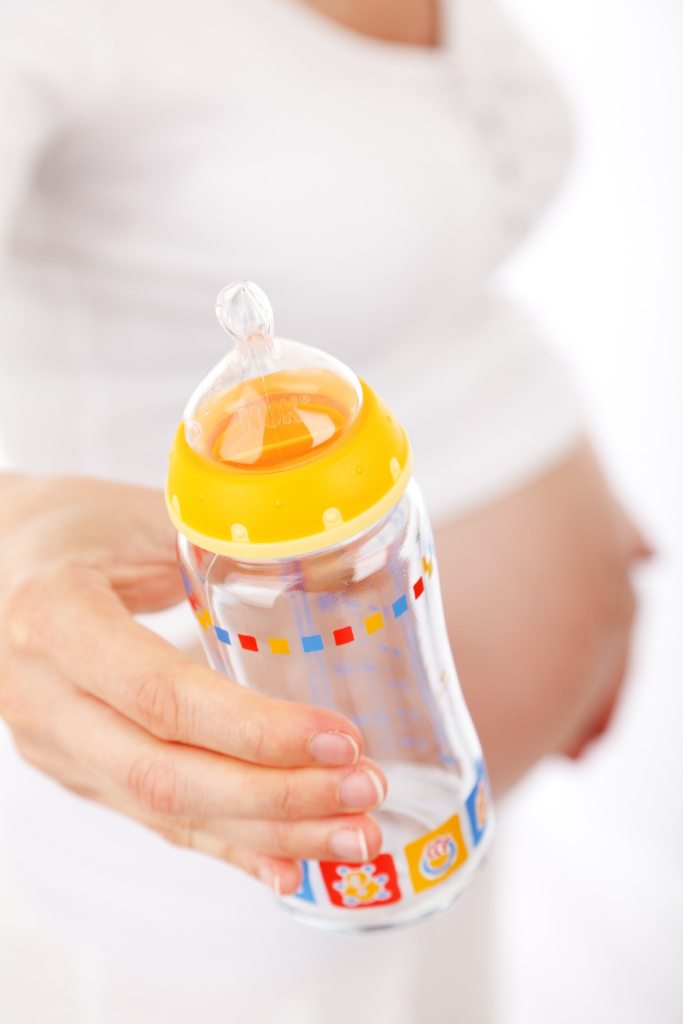
The arguments against the microwave:
Despite the fact that the bottle warmer, the microwave (and water in a pan for that matter) all essentially heat in the same way, there obviously are some concerns specific to the microwave.
– The microwaves are harmful and could leak and irradiate us all. FALSE.
This is a classic case of fear of the unknown. Micro-waves (not the machine, the thingos you were worried about) are a kind of radiation akin to radio or infrared, Unless you fear your baby being near a radio then any fear of the microwave is overblown.
– BPA can leach out of the bottle and into the milk. FALSE
because those clever bottle manufactures stopped using BPA. All the brands I’ve ever seen used (Avent, Medela, Tommee Tippee, Nuby, Cherub Baby, Pigeon, Dr Brown, Even Flow) offer BPA-free plastic and glass baby bottles. All plastics do degrade over time, so regardless of how you use them, old and cloudy plastic bottles should be discarded.
– Microwaving the formula or EBM causes it to lose nutritional value. FALSE.
All heating and cooking has an effect on the structure of our food and drink (sometimes beneficially, sometimes not) but microwaves have no more effect than any other method of heating. In fact it may help many things retain their nutritional value as the heating time is less.
– Things heated in a microwave do so unevenly, leaving super hot spots.
Now this one is true, but, how this affects heating a baby bottle needs more explanation. The microwaves are agitating the water molecules, right? That’s why some food gets hot in some spots and cool in others; different amounts of water generating different amounts of heat. If you are heating a bottle of just water in the microwave it is all heated at the same rate, without hot spots. If you heat EBM or formula, all that is needed is to shake or swirl the contents of the bottle thoroughly to evenly distribute the heat. You’ll be testing it for the correct temperature before offering it to your baby anyway, right?
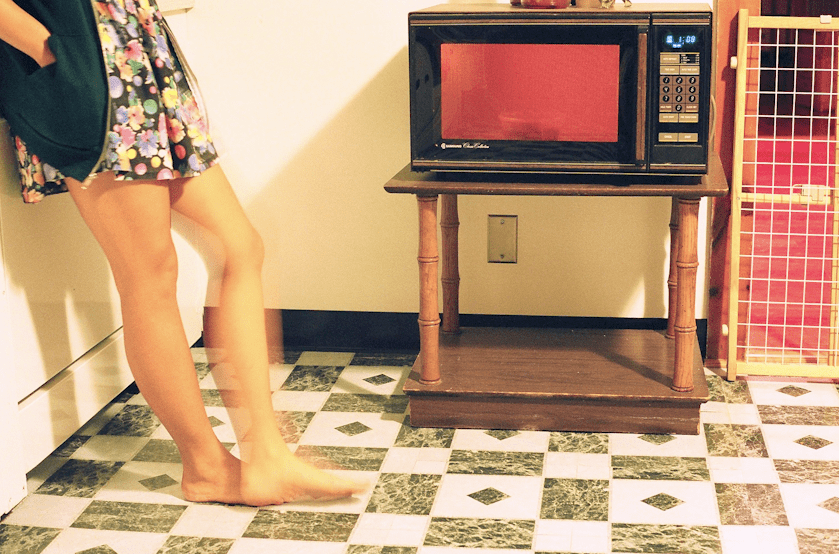
Still not convinced about the microwave?
Never mind, it’s perfectly fine not to use the microwave and yet still not need to buy that bottle warmer. The bottle warmer is simply heating water around the outside of the bottle. That’s better than the water in the pan, how exactly? It’s literally no less work; put water in pan/bottle warmer, place bottle in pan/bottle warmer, turn on heat under pan/turn on bottle warmer, wait a few mins, test bottle for correct temperature, give to baby. Or how about, run hot tap water around the outside of the bottle for a minute? Sit bottle in a jug of hot water? The only benefit is a timer, meaning you can forget about it and it will turn off. While this can be useful – is it worth the $50-$80 a warmer will cost you?
Do you really need to heat the milk at all?
The simple answer is No. Because breast milk is at body-temperature one assumes that babies are used to drinking all their milk warm. But it doesn’t follow that they need it that way, or even that they would be unhappy with a different temperature. It won’t be long before they’re drinking room-temperature or cooled water, eating foods that are cold and hot, and drinking cow’s milk straight from the fridge. It’s not harmful or mean to start getting your baby used to room-temperature bottles from very early on. They’ll find it easier to enjoy foods of different temperatures later, and transition to cold cow’s milk much easier. And it’s more convenient and flexible for you both at home and out and about.

My recommendations:
Personally, I’m comfortable using BPA-free baby bottles in the microwave (this goes for sterilisers too).
- Heat the water/formula/EBM in the bottle with the lid and teat off (to avoid steam build up in the teat).
- Get to know your microwave and how long you need. Always underestimate when using an unfamiliar microwave.
- If heating formula or EBM shake or swirl bottle well after heating to evenly distribute heat.
- Test the temperature of the milk on the inside of your wrist before giving it to your baby.
- Try offering your baby room-temperature bottles before assuming he won’t like it. If he does prefer warm, try lowering the temperature to room-temperature slowly over a period of time.


 NannySavvy